

Where Investors Look After Dubai: Two Resort Projects Managed by Radisson and Wyndham

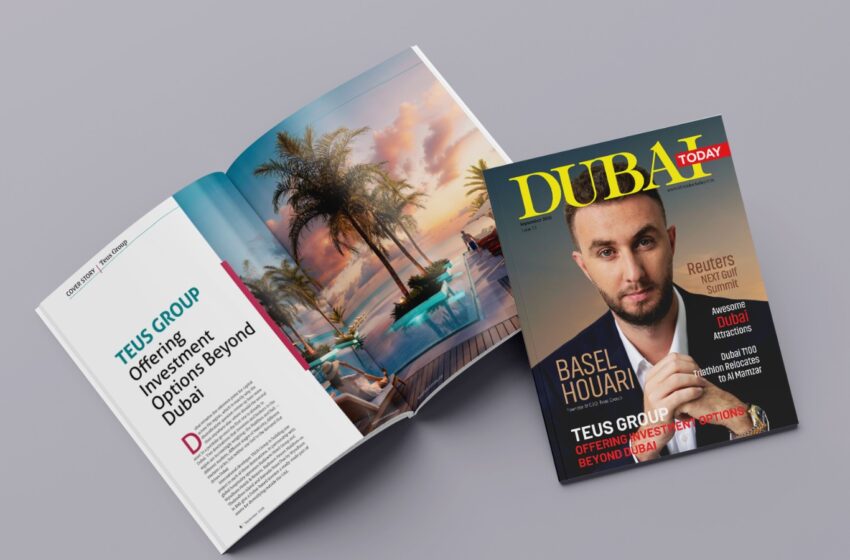
Dubai remains the reference point for capital across the region, which is exactly why the diversification question comes up here more than anywhere else: where should the second asset in a portfolio go once the first one is already in Dubai. Two destinations that investors and brokers in the region are increasingly weighing: the Maldives and Bali — different markets, different stages of maturity, different tourism cycles, but neither one tied to the demand that drives Dubai.
International developer TEUS Group is building one project in each of these destinations, in partnership with global hospitality operators Radisson Hotel Group and Wyndham Hotels & Resorts. Radisson Resort Maldives on Thulusdhoo Island and Ramada Nusa Dua by Wyndham in Bali give a Dubai-based investor a ready-made pair of assets for diversifying outside the UAE.
Why now
Diversification only works when the new asset runs on a different cycle than the core one. The Maldives and Bali complement each other well here: one is the fastest-growing market in the world right now, the other is a mature destination with a stable, established tourist flow.
On ADR growth, Dubai posted 2.7% in 2023. The Maldives grew 30% that same year, another 13% in 2024, and is forecast to grow 15% in 2025. The gap shows up even more clearly in RevPAR: by the end of 2025, the Maldives figure sits at $565 — three to four times higher than Dubai ($186), Bali ($130–140), or the Canary Islands ($155). The Maldives holds the #1 spot worldwide for revenue per available room among resort destinations.
Bali, by contrast, is a different type of market altogether: demand is already established, seasonality is predictable, and the asset’s value comes not from explosive growth but from steady flow and brand recognition among European, Asian, and Australian travelers.
For a Dubai-based investor, none of this is an argument against the local market — it’s an argument for a second or third asset alongside it, in places that don’t depend on the same demand or the same currency. The Maldivian rufiyaa is pegged to the US dollar, which further reduces currency risk on entry.
TEUS Group: the developer
TEUS Group is the international arm of a larger development group whose parent company has delivered more than 10 million square meters of residential and commercial real estate across the Middle East, Eastern Europe, and Southeast Asia since 1943. TEUS Group itself operates in 5 countries and has completed more than 100 projects, applying that group-level experience to branded resort real estate.
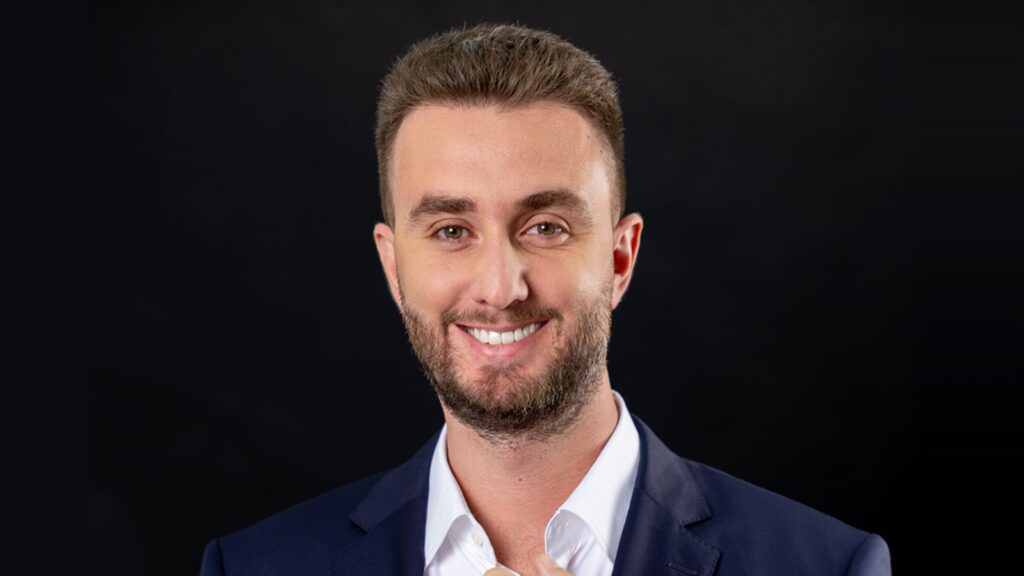
“An investor who already holds an asset in Dubai naturally looks beyond it for the next step. The Maldives and Bali give them what a single-market position can’t: an independent tourism cycle and a different currency structure,” says Basel Houari, Founder and CEO of TEUS Group.
The company’s portfolio today spans four geographies: the Maldives, Bali, Turkey, and Eastern Europe. Two projects — Radisson Resort Maldives and Ramada Nusa Dua by Wyndham — represent the company’s first wave of flagship launches under tier-one hospitality brands.
Radisson Resort Maldives: a “smart luxury” resort on Thulusdhoo Island
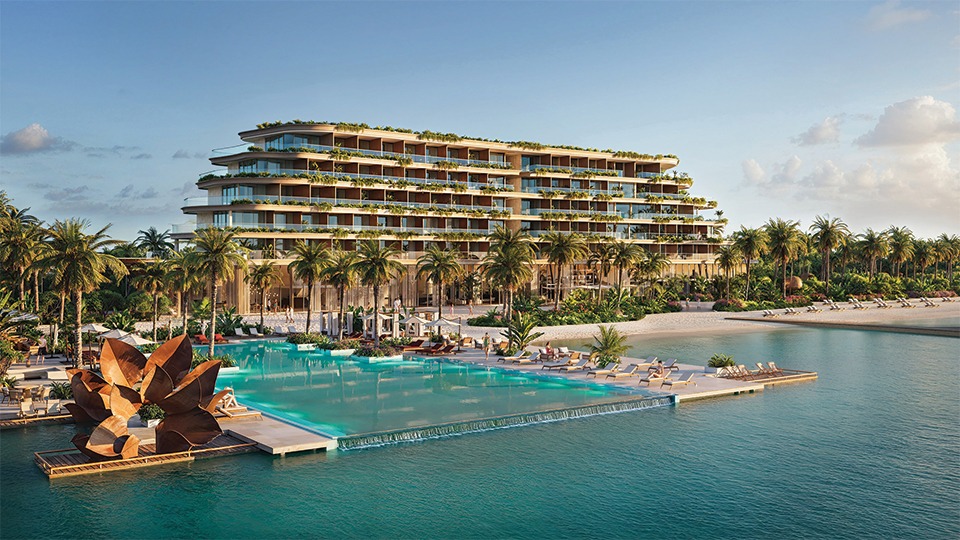
Radisson Resort Maldives is being built on Thulusdhoo Island — the “cover photo” island featured in most Maldives travel guides — just 30 minutes from Malé airport. The resort’s concept is built around “smart luxury”: inspiration, restoration, balance — a take on the Maldivian getaway without the excess formality of classic luxury resorts on private islands.
On-site: a 400-meter private beach, an infinity pool, a floating restaurant, a beach bar, a coworking and lobby zone, a lounge, a panoramic ocean-view spa, a promenade through a mangrove maze, and Cokes — one of the archipelago’s legendary surf breaks, accessible right from the resort grounds.
The format is deliberately built for families, which is rare for the Maldivian market. According to Hilton, 70% of families choose a destination based on how comfortable it is for children, while classic Maldives resorts are often seen as too closed-off for family travel. Radisson Resort Maldives is designed so kids and adults each get a genuinely good stay on the same property — a safe environment for children alongside a real sense of privacy for adults.
The second focus is wellness: the panoramic overwater spa answers a growing demand among affluent travelers for vacations built around health, not separate from it. McKinsey reports that 60% of high-income travelers choose wellness-oriented destinations, and the wellness tourism market is projected to top $1.3 trillion by 2028 — nearly doubling in five years.
The resort operates as an upscale property under Radisson Hotel Group, a network of more than 1,500 hotels across 95 countries. That’s a deliberate segment choice: upscale properties hold the highest occupancy in the market (72% versus 65% for luxury, per STR Global) and face the least competition among Maldives projects launching before 2029, most of which are positioned as luxury. The combination of a recognizable brand, a modern concept, and the least-competitive segment produces projected rental yields of 12–14% annually (World Travel Awards, 2024).
For an investor, this is a fundamentally different type of asset than the Bali project: a private island with a self-contained resort ecosystem. Paired with Ramada Nusa Dua by Wyndham, it opens the door to two different, complementary resort markets at once.
Ramada Nusa Dua by Wyndham: a next-generation resort in Bali, built around longevity
Ramada Nusa Dua by Wyndham is being built in Nusa Dua, Bali’s leading premium hotel district, home to The St. Regis Bali Resort, Grand Hyatt Bali, and Aman Villas at Nusa Dua. Wyndham Hotels & Resorts manages the property, giving it the same international operating standard that Radisson brings to the Maldives project. The design keeps a strong artistic sensibility too — the boutique hotel and branded villas are built with as much attention to aesthetics as function.
The project’s defining feature is a new concept: hospitality is shifting away from the “room, pool, restaurant, spa” model toward longevity hospitality, where guests choose not just a service and a location but a quality of life, recovery, and active longevity. That shift is what the next phase of Ramada Nusa Dua is built on: the Ramada Longevity Center, a standalone business unit within the project.
This isn’t a classic spa. The center brings together functional diagnostics, recovery programs, personalized nutrition, sleep optimization, anti-aging protocols, and corporate wellness, built around an individual health path that can continue after the trip ends.
The center’s audience extends well beyond hotel guests: villa owners, Bali residents, expats, digital nomads, corporate clients, and travelers coming specifically for recovery programs — creating year-round demand independent of hotel occupancy. According to the project’s financial model, shifting from a classic spa to a longevity format can lift this business unit’s yield to 30%.
The project’s stated rental yield sits at 15–15.8% annually, one of the highest in Southeast Asia’s branded resort real estate market. Ramada Nusa Dua by Wyndham is TEUS Group’s second project in Bali, following the boutique hotel AMANI Melasti, with delivery to guests planned for 2028. The project has also picked up industry recognition: TEUS Group and Ramada Nusa Dua by Wyndham picked up the Asia Pacific Hotel Awards 2026–2027 title.
For an investor, this is a second, distinct type of asset compared with the Maldives project: not an island with logistical constraints, but a district with established five-star infrastructure, a predictable tourist flow, and growing demand for health-focused infrastructure — fast becoming the new standard for premium resort projects.
The logic for a Dubai-based investor or broker
Both TEUS Group projects serve the same purpose: not replacing a Dubai portfolio, but extending it into markets with higher resort yields and their own tourism cycles. The Maldives and Bali don’t compete with Dubai for the same traveler and don’t depend on the same demand — making this combination a tool for geographic and currency diversification rather than a duplication of risk.
Each project strengthens the portfolio in its own way. Radisson Resort Maldives gives access to a market at the stage where pricing is still being established — the legal mechanism allowing individual unit sales to private investors in the Maldives has only existed since 2023; before that, market access was limited to villa owners with a minimum spend of €2 million. Ramada Nusa Dua by Wyndham offers entry into an already mature, well-recognized market in Bali, with a higher stated yield (15–15.8% annually) and early access to the emerging longevity hospitality category.
For brokers, this is an opportunity in its own right: two assets under global hotel brands, Radisson and Wyndham, offer a straightforward product for clients who already own property in Dubai and are looking for their next move beyond it — whether that’s a bet on growth (Maldives) or on the stability of a mature market entering a new growth category (Bali).
